
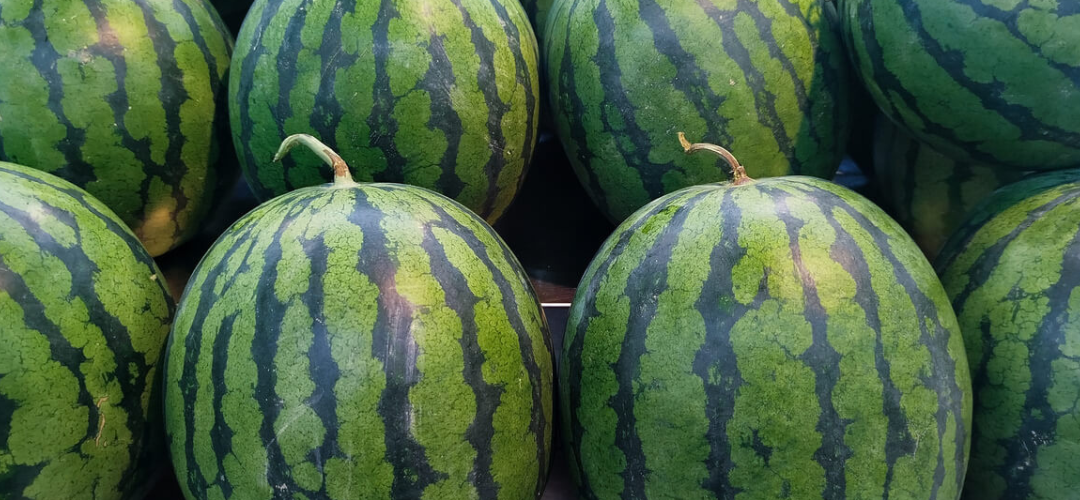
I’ve spent a career on the cold-chain front lines moving from the packing houses in the Peloponnese to the 4AM chaos of London’s wholesale markets. I’ve seen plenty of “sweet” melons arrive as mush because they couldn’t handle the 2,500-mile haul; for a professional buyer, the real value of Greek Watermelons lies in the physical architecture of the fruit itself.
Most global producers are busy chasing high-turnover, seedless “rounds” for the supermarkets; meanwhile, Greece has stuck with the oblong varieties. That oblong shape can handle the gruelling transit and keeps the fruit crisp long after the truck doors open.
Why Origin Dictates Your Bottom Line
When comparing Greek oblong varieties to the standard global round melons, the differences aren’t simply cosmetic but also bring a variety of commercial benefits. Here is how the Greek spec stacks up for a B2B operation:
- Premium Sugar Levels (12% – 14% Brix): While standard fruit often hovers around 10%, Greek melons hit a higher plateau, allowing you to command a retail price premium.
- Heavy-Duty Rind (15mm – 22mm): This extra thickness isn’t dead weight; it is your insurance against bottom-layer collapse during high-volume transport.
- Fibrous Flesh Density: Greek fruit has “bone.” This high cellular density reduces internal bruising and “water-logging” during the vibrations of road freight.
- Low Respiration Rates: These varieties stay “dormant” longer, providing superior stability in the cramped, mixed-load environments of London warehouses.
Why is flesh density the most important metric for Greek Watermelon importers?
In the trade, we talk about “bone.” Greek melons consistently hit 12%+ Brix, sure, but the real commercial win is the flesh density. Spanish or Brazilian fruit often carries too much water which is a recipe for cell breakdown once the road freight vibrations kick in.
That density is your best defence against “hollow heart” and the kind of internal bruising that kills a sale. We source our Greek Watermelons specifically for this cellular “bone” to ensure they take a beating from the UK supply chain and stay firm. That translates to less waste because every mealy or bruised melon is money straight out of your pocket.
How does thermal inertia protect Greek Watermelons during London heatwaves?
Talk to any importer and they’ll tell you: the real danger isn’t the motorway haul but those few hours the fruit spends sitting on a hot London loading dock. Greek oblong varieties possess significant “thermal inertia” because of their sheer mass. Once we stabilise the core temperature at 10°C during transit, the fruit resists temperature spikes more effectively than smaller melons.
This thermal stability prevents “sweating” and condensation build-up upon arrival, the primary triggers for fungal growth. We manage our Transport and Logistics to protect this thermal buffer, giving your team a few extra degrees of safety while they get the load under cover.
How does rind thickness impact your landed cost per kilo?
I see retailers pass on Dumaras just because they don’t slide into a standard crate. They’re leaving money on the table. These 12–15kg giants possess a rind thickness that seedless hybrids cannot match, providing the structural integrity needed for high-volume transport.
A thicker rind allows for aggressive “floor-loading” in a refrigerated trailer. In a high-inflation transport market, stacking fruit safely without collapsing the bottom layer lets you maximise every cubic metre of the truck. This efficiency lowers your landed cost per kilo which often is the single most important metric for any Greek watermelon wholesale London operation.
Why does the Ilia harvest window offer a strategic market advantage?
The Ilia region uses low-tunnel cultivation to grab a peak harvest in early June. Hitting the market early with 12% Brix means you’re banking premium margins while the rest of the trade is still waiting on the mid-summer Spanish glut.
Sourcing from the Peloponnese grants you a two-week competitive lead. Our Import Service helps you time this window perfectly, securing the highest-margin period of the summer season before the market becomes saturated.
What are the pro-tips for pallet stability and floor-loading oblong fruit?
When floor-loading oblong Greek fruit, use an “interlocking” pattern. Unlike round fruit that creates unstable “voids” in the trailer, the long varieties pack securely nose-to-tail.
- Vertical Pressure: The mineral-rich soil of the Peloponnese reinforces the rind. You can load five to six layers high without worrying about the bottom layer splitting.
- Airflow Management: Maintain longitudinal airflow from the fridge unit. Greek fruit holds its “field heat” longer than smaller varieties. You need that cold air moving through the gaps to drop the core temperature fast.
Why does soil chemistry in the Peloponnese improve watermelon shelf life?
Experienced buyers look at the specific soil chemistry of the coastal plains. The Peloponnese contains high levels of potassium, which drives sugar transport. Simultaneously, high calcium levels build the cell walls.
This mineral profile prevents the fruit from “weeping” after slicing. If you supply prep-kitchens or the London catering trade, the “cut-life” of the fruit becomes your primary selling point. Greek Watermelons stay crisp in a 24-hour service cycle, whereas lower-mineral fruit loses its structure and pools water in the container almost immediately.
Can Greek Watermelons handle mixed-load storage in London warehouses?
London warehouses are notoriously cramped, and traders rarely have the luxury of storing fruit alone. Greek Watermelons offer a technical advantage here because they maintain lower respiration rates.
That kind of toughness gives a wholesaler breathing room in the cold room. You can push these Greek fruit varieties through a mixed distribution network without them going soft on you like more delicate hybrids.
How do importers time the “Brix Gap” between Morocco and Spain?
Strategic sourcing depends on timing the “Brix Stability” window. Greek Watermelons for UK import act as the essential bridge. When the Moroccan season finishes in early June and the Spanish market becomes volatile in mid-July, the Greek “sugar plateau” offers a stable supply.
Unlike varieties that “spike” and then rapidly degrade, Greek export clones provide stability. Our dedicated Service Team monitors these shifts to ensure your shipment retains its premium flavour profile even during port delays or Channel congestion.
How do I secure my Greek allocation for the summer sprint?
In this industry, you must secure high-quality fruit months in advance. The window for the best Peloponnese arrivals remains notoriously tight.
If you want to source for technical performance and shelf-life, secure your June allocation now. We handle the “short chain” logistics so that when the trucks arrive in London, the fruit has the same crunch it had in the field. Don’t leave your summer revenue to chance.